What does patchouli smell like?
Find out what patchouli actually smells like: earthy, woody and complex. Learn why it varies by quality and how it's used in perfumery.

You could say patchouli smells like the forest floor after summer rain: an earthy, woody, musky scent that’s known for its grounding effect and aura of calm. While its name is well known, it’s hard to describe the scent itself. If someone asked you, “What does patchouli smell like?”, you’d probably hesitate.
Popular in perfumery since the 1960s, patchouli is a typical chameleon scent: there’s no easy way to describe it. While the fragrance is sometimes associated with the free-spirited hippy lifestyle (often used as an oil to mask unpleasant aromas), today it's a perfumery icon. Patchouli is the principal ingredient in many well-known, and some lesser-known perfumes, its smooth, rich tones adding depth and character. It’s a divisive fragrance: some love it, others hate it, and it can smell curiously different depending on how it is prepared or what it’s blended with. By getting to know this nostalgic, complex scent properly, we can start to appreciate its true star status.
What are the main scent characteristics of patchouli?
The smell of patchouli is hard to pin down. It’s sweet yet spicy, smoky and intoxicating, musky, chocolatey, velvety. It can evoke the scents of times gone by or the wonderful woody essence of a beautiful, ancient book. It’s described as relaxing, sensual, exotic and romantic; an earthy grounding scent. It sits firmly in the woody fragrance family in perfumery, despite the fact that it’s a leafy bush. Woody fragrances are known to be warm and dry, characterised by scents like sandalwood, cedar and oud.
Why does patchouli sometimes smell different than expected?
Quality is the main reason for it to smell different. In the 60s, it was used in overpowering amounts, and the oil was cheap, synthetic and sharp. The patchouli used in perfumery has a deeper, more complex fragrance, with a softness: the herby green elements give way to a rich, smooth, long-lasting fragrance that balances sweet and smoky scents. Réminiscence was born from an encounter with the scent of patchouli, and with it, our collaboration with Robertet, a world leader in natural raw materials.
Another reason patchouli smells different is that everyone picks up on distinct elements of its complex scent profile. High-quality patchouli has many scent layers. Freshly distilled it has a leafier, greener element, while the aged kind tends more towards the sweet and chocolatey. Dark patchouli is distilled in iron vessels for a heavier, dirtier finish, while light patchouli, distilled in stainless steel, is smoother and lighter. In its most iconic form, this fragrance evokes the earthy notes of a rain-soaked forest floor.
Where does patchouli come from?
The common name for the Pogostemon cablin plant, it’s part of the Lamiaceae family, also known as mint or deadnettle. This perennial herb with pinky-purple and white flowers is native to Southeast Asia: Indonesia, Malaysia, the Philippines and India. Its name comes from the Tamil language, Patchai meaning green and Ilai meaning leaf. The herb made its way to Europe along the silk road. Traders are said to have layered the leaves among the silks to keep them fresh during shipping. Its association with rich silks cemented its place in the luxury world.
Extracting the purest essence from the plant requires great care. Only the top layers of leaves are used in perfumery because they have the highest concentration of fragrance. They’re picked and slowly dried in the sun, with frequent turning to ensure the drying is even. Once fully dried, the fragrance is extracted to create the oil. This is traditionally done through steam distillation, but CO2 extraction is the more modern method. This newer method employs lower temperatures, preserving more of the plant’s natural state, making it ideal for creating a variety of patchouli perfumes.
How is patchouli used in perfumes and scented products?
This green herb also has anti-inflammatory, antiseptic and soothing properties for the skin, meaning it is an excellent addition to body lotions, creams, bubble baths and body washes, perfect for layering with a favourite perfume. There is even some research that points to potential anti-ageing properties. Like all essential oils, it should not be applied to the skin undiluted.
Patchouli also finds its way into aromatherapy, not just in oil, but also candles, wax melts and diffusers, either alone or paired with other oils. In natural healthcare, it has been known to help with anxiety and depression, providing a sense of grounding, and to alleviate the symptoms of a cold or headache. In the warmer months it works as an alternative to citronella as an insecticide, keeping away the flies and mosquitoes. Furthermore, patchouli oil can help with digestive issues such as bloating or cramping, something it has been used for since ancient times.
One of the incredible properties of patchouli as a fragrance is that it has the ability to blend so easily with other scents. It’s often called upon as a base note due to its heavy molecular structure. This means it evaporates slowly and makes the fragrance last longer.
How does patchouli work with other fragrance notes?
Patchouli’s multi-faceted nature and long-lasting properties can balance, control or enhance other fragrances. In fact, its ability to hide beneath them, to augment, free and enliven them or make them last longer is one of the reasons people find it so hard to answer the question: “what does patchouli smell like?”
- It can take the edge off sweet gourmand fragrances like vanilla or tonka bean, adding a velvety warmth while enhancing the cocoa elements.
- It adds richness to floral fragrances like bergamot or lavender, providing a sensual, multi-layered, grounding effect.
- In ambery fragrances it augments the dark, exotic foundations, heightening mystery and suspense.
- In musky fragrances it acts as an anchor, deepening its sensuality and velvety nature, for a modern appeal.
- In marine fragrances it creates a delightful division as the ocean clashes with the woody floor: it grounds those misty salty notes, creating a deeper profile.
| Fragrance family | How patchouli behaves |
| Gourmand | Softens the sweetness for a warm, more velvety accord. |
| Floral | Adds richness for a sensual, multi-layered, grounding effect. |
| Ambery | Augments dark, exotic foundations, heightening mystery and depth. |
| Musky | Acts as an anchor, deepening sensuality for a smooth, modern finish. |
| Marine | Grounds misty, salty top notes against its earthy base, for a striking, layered contrast. |
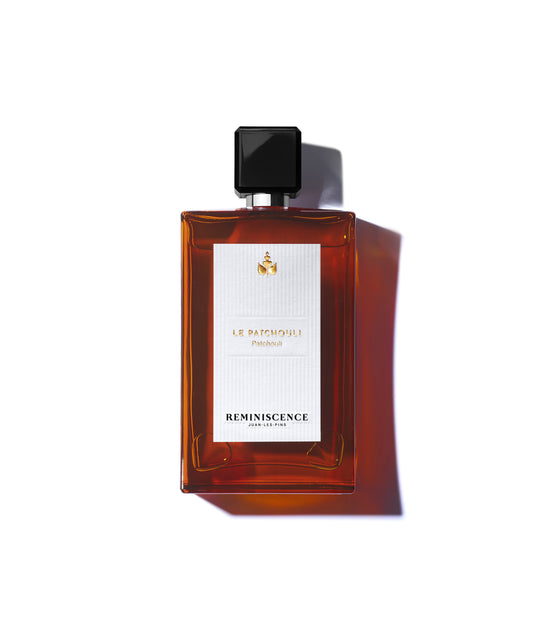
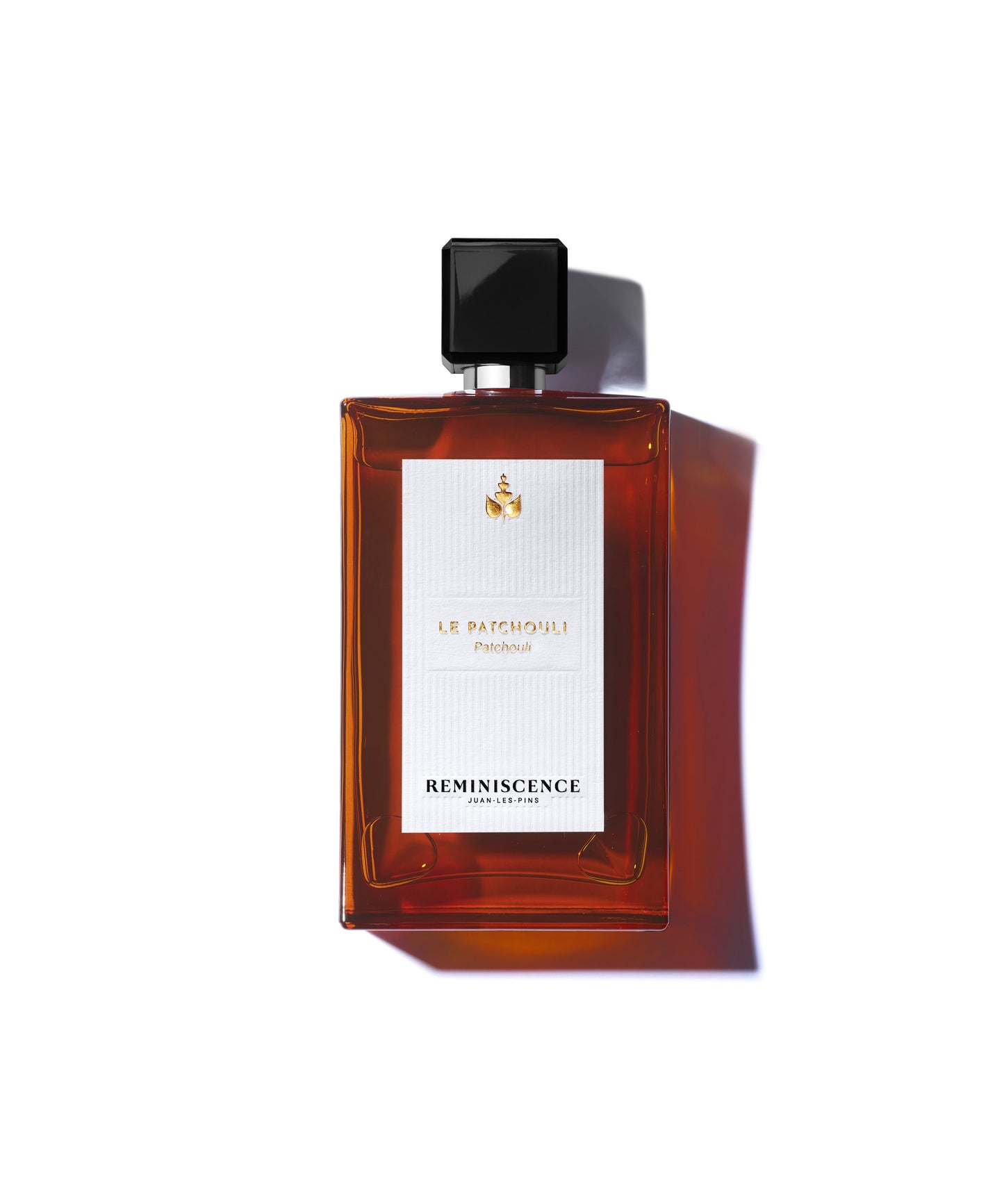
This mossy, ambery fragrance is also an excellent choice if you enjoy layering perfumes, using them in different orders to create scents that are totally unique. It reigns supreme in Réminiscence’s Le Patchouli, a scent that evokes wanderlust, freedom and boldness. The almost 60% concentration of patchouli essential oil and other whole ingredients in this fragrance make for a strong olfactory signature that layers well with woody perfumes, like Bois Étoilé, increasing the spicy elements, and amber fragrances, like Souffle Ambré, where it illuminates and adds depth to the vanilla base notes.
What emotions or moods does patchouli’s scent evoke?
Patchouli has an uplifting effect enhanced by a grounding nature that imbues a sense of fearlessness, so you feel confident and free, with a sense that everything is within reach. It can be calming and seductive, enchanting and addictive. Its soothing presence can often be found where yoga is practised, keeping stress and worries at bay so those in the room can centre themselves in the moment. Its nostalgic effect can be comforting, taking you back to the simpler times of childhood. It reduces feelings of overwhelm, helping to soothe the mind, body and soul.
Key takeaways
- Patchouli smells like a mossy forest floor. It is complex and woody, evoking nostalgia. Everyone smells something slightly different.
- It originates from Southeast Asia and made its way to Europe via the silk road.
- Patchouli is an excellent choice for body care as it has antiseptic, anti-inflammatory, soothing properties and in some circles is even reported to have an anti-ageing, rejuvenating effect.
- It is a star ingredient in many perfumes, often as a base note. It balances a variety of scents and increases the staying power.
- Patchouli oil is also known for its confidence-boosting, anxiety-dimming properties.